
Why it is important to keep in mind what you know and what you don’t when playing VGC
In this article, I would like to expand on a topic I briefly mentioned in my last article (Latios vs. Latias: Why we play the way we play): The concept of the known unknown. It’s something that most VGC players already consider on at least a subconscious level, but maybe can’t quite explain or haven’t consciously thought about. So, let’s try to define the known unknown, as well as the other categories of knowledge, and explore why it is important to be aware of them while playing VGC.
Awareness and Understanding: The Rumsfeld Matrix
Knowledge can in this context be divided into four categories, which are differentiated by the answers to two questions:
- Am I aware of the information’s existence?
- Do I understand the information?
The four categories can be depicted in a two-by-two table:
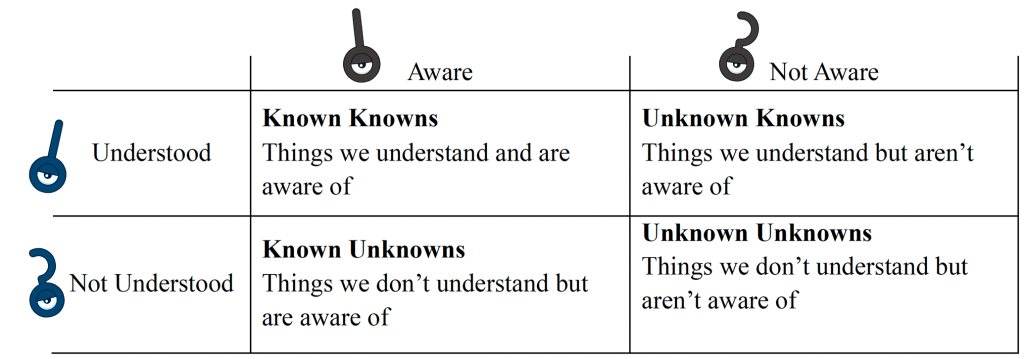
This table has been dubbed the “Rumsfeld Matrix”, after former United States Secretary of Defense Donald Rumsfeld, who attempted to explain the concept in a news briefing in 2002. While Rumsfeld’s statement drew attention to the concept, the terms were already in use decades earlier. There are records of the terms “known unknowns” and “unknown unknowns” being commonly used inside NASA during the 1980s, as well as in the United States Armed Forces during the 1960s.
Let’s take a closer look at the different categories of knowledge and how they relate to VGC:
Known Knowns
This category is straightforward: It encompasses facts that we know and can access at will. In the context of VGC, there are known knowns that players have acquired in advance: Information like the Type Chart (although the game also tells us the effectiveness of moves during our turn), the effects of items, or (ideally) our most important speed tiers and damage calcs. As players we are aware that this knowledge is crucial to being able to play the game, so we study up on it beforehand.
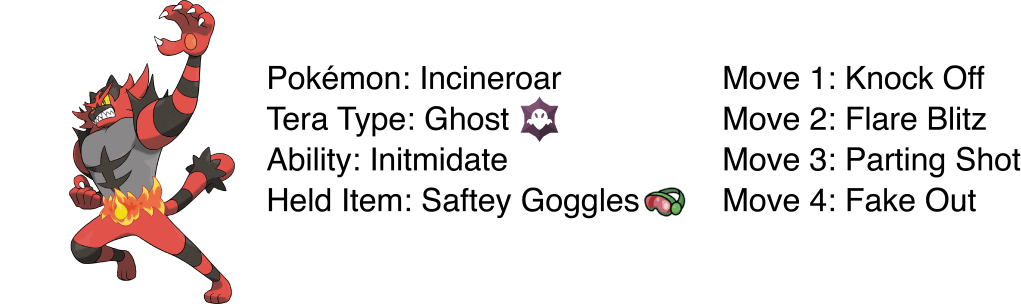
There are also some known knowns that are handed to us in the moment, mainly in the form of our opponent’s Teamsheet. The moment we read the Teamsheet, a whole lot of information turns from known unknowns to known knowns. Suddenly you know what six Pokémon your opponent has on their team, as well as their moves, items, abilities and tera types.
Unknown Knowns
Of all four categories, the unknown known is the hardest to define and can be interpreted in different ways. One interpretation is information that we know, but have forgotten or chosen to forget in a given moment. Once again, clicking Fake Out into a Covert Cloak is a great example. Another interpretation would be to see it as information that we didn’t specifically seek out or know for sure, but that we know instinctively. You’ve probably never calculated how much damage 252+ SpA Choice Specs-Tera Electric-Hadron Engine Electro Drift in Electric Terrain does to Tornadus, but you’re probably sure that it’s going to pick up the KO without you needing to use Helping Hand (it’s 688.3 – 812.2%).
Known Unknowns
The concept of known unknowns has its origin in ancient Greece: The philosopher Socrates famously stated “I know that I know nothing” sometime around the year 400 BC. He claimed to be the wisest person in Athens, while being convinced that he knew absolutely nothing. Since he was certain that nobody else knew anything either, Socrates concluded that he was the wisest person of all, because he was at least aware of his own lack of knowledge.
In a game of VGC Pokémon, there are three big known unknowns:
- The opponent’s EV spreads
- The Pokémon your opponent has in the back
- The moves your opponent is going to choose
It’s important to learn from Socrates and be aware, that all of these are in fact known unknowns! A good player can make an educated guess, but they never know for sure. Let’s examine why this is important:
The opponent’s EV spreads
Sometimes it can be tempting to assume, that you know what your opponent’s EV spread is. The best example are Pokémon holding a Focus Sash. It’s easy to assume that they are fast and frail, since the Sash ensures that they are going to survive at least one attack. If your opponent has a Focus Sash Smeargle on the field, you can guess that Surging Strikes from your Urshifu is probably going to KO it through its Focus Sash.
252+ Atk Urshifu-Rapid Strike Surging Strikes (3 hits) vs. 252 HP / 0 Def Smeargle on a critical hit: 237-282 (146.2 – 174%) — guaranteed OHKO
However, it is possible for Smeargle to be EV’d to survive this attack!
252+ Atk Urshifu-Rapid Strike Surging Strikes (3 hits) vs. 252 HP / 252+ Def Smeargle on a critical hit: 138-165 (85.1 – 101.8%) — 0.88% chance to OHKO
You may think that the damage calc is a known known, but unless you’ve seen your Urshifu deal clearly more than 33% with one hit of the Surging Strikes before, it is still a known unknown.
The Pokémon your opponent has in the back
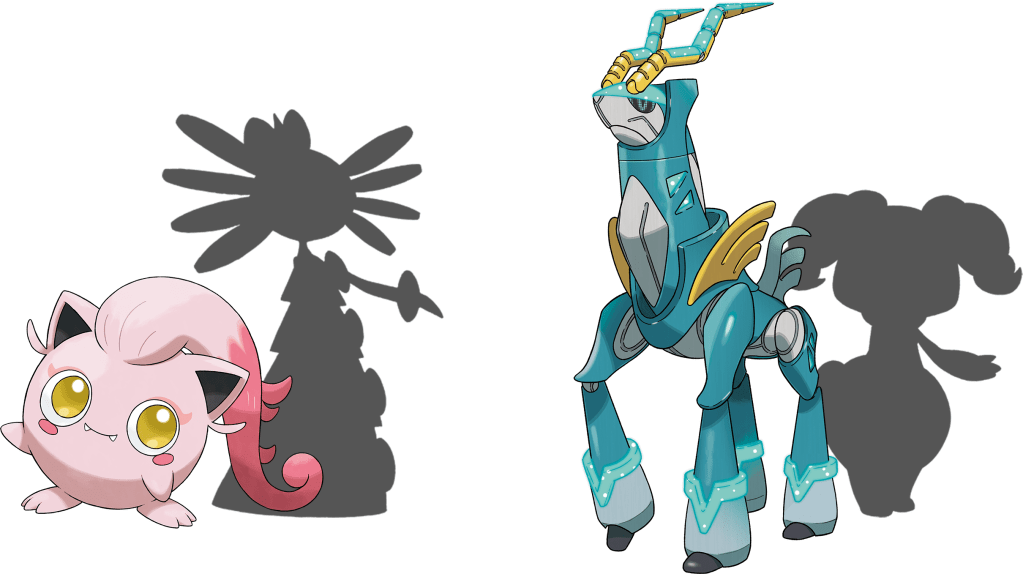
Depending on what Pokémon your opponent leads into battle, you may be able to guess what Pokémon they have in the back. An Expanding Force user rarely comes to a battle without an Indeedee, and a Perish Song user usually foreshadows a Gothitelle in the back. You can adjust your play based on these assumptions, but it’s important to consider the possibility of a bluff. A fast Scream Tail can still be plenty annoying with Encore and Disable, even if the player chooses to forgo the Perish Trap mode with Gothitelle, and Iron Crown is still able to dish out massive damage with Tachyon Cutter, even if it can’t use Expanding Force in Psychic Terrain. You can never be fully sure what Pokémon your opponent has in the back until they have revealed them.
The moves your opponent is going to choose
While you are selecting your moves, what moves your opponent is choosing is known unknown information. It’s important to remember, that your opponent could actually make any play, however unlikely you may consider it to be. There is never a play that they absolutely must make. If your opponent thinks that you won’t use Encore on a Pokémon that just protected itself, they may choose to keep it on the field and attack. To avoid this, you can try to cover for as many of your opponent’s plays as possible.
Unknown Unknowns
Unknown unknowns are all the problems that could arise that we haven’t even considered. It’s niche interactions that we have never encountered before, or a Pokémon so rarely used that we have no clue what it or its moves do. Who knew what Mystical Power Mesprit did before Brisbane Regionals?
Since VGC is played within a framework provided by the current game, it is possible to reduce the unknown unknowns to zero.
The Dangers of Overconfidence
Psychologist Daniel Kahneman described how disregarding the unknown can lead to people being overly confident in their choices. To do this he introduced the concept of “What you see is all there is”, which he shortened to the incredibly exciting acronym WYSIATI (riveting stuff, I know). It means that people only consider what is directly in front of them to make their choices, without thinking about all the things that could go wrong. It’s easy to confidently click Fake Out on turn 1, when you don’t think about the possibility of a Farigiraf switching in. This is a classic example of overconfidence caused by a player disregarding a known unknown and acting under the assumption of WYSIATI. They aren’t considering the Pokémon their opponent has in the back. Keeping in mind all of the things that you know and do not know is crucial in VGC.
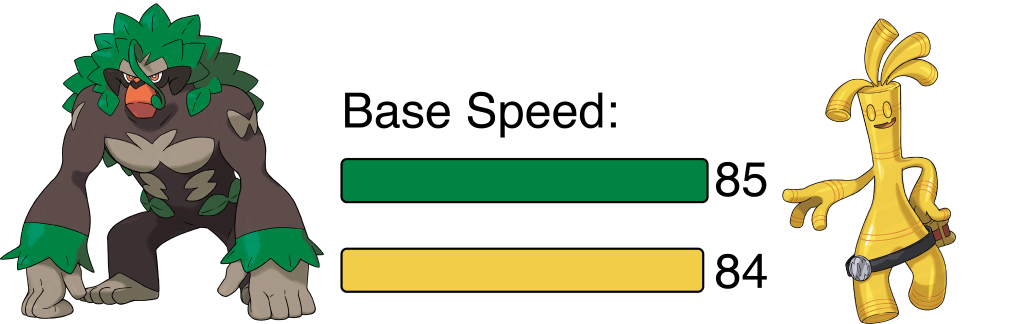
Let’s look at an example of how not being aware of an unknown unknown can cause overconfidence. I myself fell victim to this at the 2025 Gdansk Regional Championships. I had my Choice Specs Gholdengo out on the field against my opponent’s Rillaboom. On the Teamsheet the Rillaboom looked a bit unusual: instead of the typical Assault Vest and Tera Fire, this one used Life Orb and Tera Stellar. I didn’t think much of it, it only meant that Gholdengo’s Make It Rain was going to deal even more damage. I was absolutely sure that my Gholdengo was going to move first, after all I had seen it happen dozens of times. Despite not knowing the Pokémon’s base speed stats by heart, I was sure that Gholdengo was naturally faster than Rillaboom, and since mine was trained to be as fast as possible, I was 100% certain that it was going to move first and win me the game. However, as the turn played out, I was shocked to see the Rillaboom moving first and knocking out my Gholdengo with a Tera Stellar boosted High Horsepower. It turns out, that Rillaboom’s base speed is one point higher than Gholdengo’s, 85 compared to 84. Since I had only ever seen Gholdengo move before Rillaboom, I assumed it to be a known known that Gholdengo was naturally faster than Rillaboom. This is a great example of the availability heuristic, where people assume something because they have seen it before. In reality, the speeds were an unknown unknown. My opponent exploited this assumption – and won the game because of it.
Conclusion
Knowledge can be broadly divided into four categories: known knowns, unknown knowns, known unknowns and unknown unknowns.
Known knowns are all the pieces of information directly available to you, either learned beforehand or given to you in the moment.
Things that you didn’t explicitly learn, but understand instinctively, as well as information that you know but aren’t considering in the moment are both possible interpretations of unknown knowns.
Ideally, there are no unknown unknowns in VGC, since a good player should know all of the game’s mechanics.
Known unknowns play an important part in VGC and should always be kept in mind when choosing your plays. The three most important known unknowns are:
- The opponent’s EV spreads
- The Pokémon your opponent has in the back
- The moves your opponent is going to choose
Don’t fall victim to WYSIATI and carefully consider all possibilities!
Not considering unknowns can lead to overconfidence and making plays that can be countered easily. Just like Socrates, we need to be aware of all the things that we do not know. If we do that, we already know more than many others.

 Alpensee eSports e.V.