
Using behavioural economics to understand how we make decisions in Pokémon VGC
Anyone who has ever clicked Fake Out into a Covert Cloak knows, that the first move that pops into your head is not always the best one. It’s not that you didn’t read the teamsheet. You noticed the Covert Cloak, but your first instinct was still to click Fake Out. You made a snap decision, and it cost you. If you had paused to think about the board state, you would have made a different play.
In 2011 the psychologist Daniel Kahneman published a book that dealt with this sort of problem. “Thinking, Fast and Slow” is a summary of the work that Kahneman did with his long-time research partner Amos Tversky. Even though they were both psychologists, the field that their work launched would eventually become known as behavioural economics. This is because their research can be used to describe how people make economic decisions. The book mainly analyses how people make choices and the pitfalls that lead to wrong actions, such as clicking Fake Out into a Covert Cloak. So, in this article let’s look at how the ideas of Kahneman and Tversky can be applied to Pokémon VGC and how understanding them can help eliminate unnecessary mistakes.

Two Systems
Kahneman describes two different modes of thought: One of them makes fast, instinctive, almost automatic decisions, while the other is slower and makes conscious and calculated choices. He names these two mechanisms System 1 and System 2. Since these names are quite abstract and we are talking about VGC, let’s use two Pokémon to represent them: Latios and Latias.
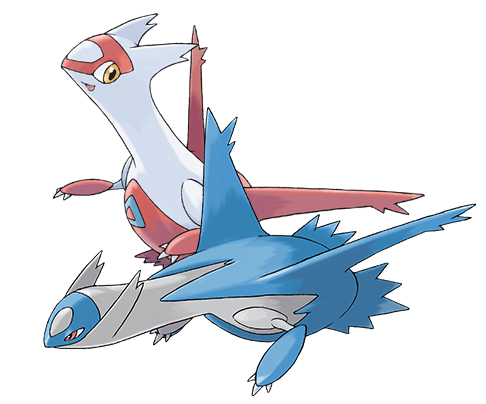
System 1: Latios
Your inner Latios is responsible for all the quick, unconscious decisions you make on a frequent basis. It loves to immediately lock in Soul Dew-boosted Draco Meteor to quickly take a KO. A few instances of System 1 activity listed by Kahneman are:
- Solving 2 + 2 = ?
- Driving a car on an empty road
- Walking at a normal pace
In VGC, Latios is the urge to click Fake Out on Turn 1 or to Terastallize you Calyrex-Shadow Rider when facing a Dark Type. In many cases these are the right choices to make, but sometimes you may be missing a better play. This is where Latias comes in.
System 2: Latias
Just like Latias is slower and more support oriented than Latios, System 2 is responsible for making slow, calculated decisions. Some examples are:
- Solving 17 x 24 = ?
- Parking a car in a tight spot
- Walking at a faster than normal pace
Latias is at work when you stop yourself from making the first move that comes to mind and instead consider alternative plays. Maybe you don’t need to Terastallize Calyrex, because you can redirect the opponents Dark Type attack.
Latios is responsible for Autoplay. What happens when you immediately lock in a move on Pokémon Showdown, only to cancel it again a second later, is Latios making a snap decision before Latias has time to approve it. After a short time, you realize that you should have thought about the turn more carefully before deciding, so you cancel your input.
It’s important to not let Latios take over during battle. Even if you think you know the best move instinctively, you should not immediately lock it in. Instead, use your remaining move time to think through as many contingencies as possible.
Heuristics and biases
In their research Kahneman and Tversky tried to find explanations for why humans often make wrong decisions. Two important mechanisms they identified are heuristics and biases.
Heuristics are mental shortcuts that people use to come to conclusions without much thought. They associate new information with existing patterns, letting us make decisions quickly. They are very efficient and let us save valuable time, but they don’t always lead to the optimal outcome. An example of a heuristic in VGC would be assuming a Pokémon’s Tera Type, because there is only one that is commonly used.
“My opponent has a Rillaboom. Since almost all Rillaboom use Fire as their Tera Type, this one likely does as well.”
Heuristics are susceptible to systematic mistakes, caused by a lack of information or relying too much on past experiences. These are called biases. The previously mentioned Tera Type on Rillaboom is an example of what is called the “availability heuristic”. Since we see so many Rillaboom with Tera Fire, we are biased towards thinking that our opponent’s is as well and might overlook an unusual Tera Type on their teamsheet.
Let’s look at some more examples of heuristics and biases that can be applied to VGC:
Anchoring: The Speedtie Bias
This bias describes how people are likely to rely on the first piece of information they are given. For instance, if a player’s Flutter Mane’s Protosynthesis activates before the opponents, the player is likely to dismiss the possibility of a speedtie and play their next turn under the assumption, that their Flutter Mane is faster. Let’s look at another example:
“My Calyrex-Shadow Rider barely survived a Draco Meteor from Choice Specs Miraidon without Electric Terrain. This means, that it will probably survive the same situation again in the next game.”
In reality, this survival was very likely due to a damage roll, but because you have seen your Calyrex survive the Draco Meteor once, you think that it will most likely survive again. Let’s look at the damage calculation using Luca Ceribelli’s Worlds 2024 winning Miraidon and Wolfe Glick’s Worlds 2024 Calyrex-Shadow Rider:
244+ SpA Choice Specs Miraidon Draco Meteor vs. 140 HP / 12 SpD Calyrex-Shadow Rider: 184-217 (95.3 – 112.4%) — 75% chance to OHKO
Calyrex is more likely to go down to this move than not, but since you don’t know the exact odds and have seen it survive once, you are likely to think that it will survive again, despite the odds not being in your favour.
Sunk Cost: The Gholdengo Fallacy
The sunk cost fallacy describes the phenomenon, that people are more likely to keep doing something if they have already invested a lot of resources into it. They don’t want to admit that what they did was a mistake, so they keep doing it in the hopes that it will pay off eventually. A good example from VGC is that players are often unwilling to switch out a boosted Pokémon, instead risking it being KO’d, even if they are likely to need it at a later point in the game.
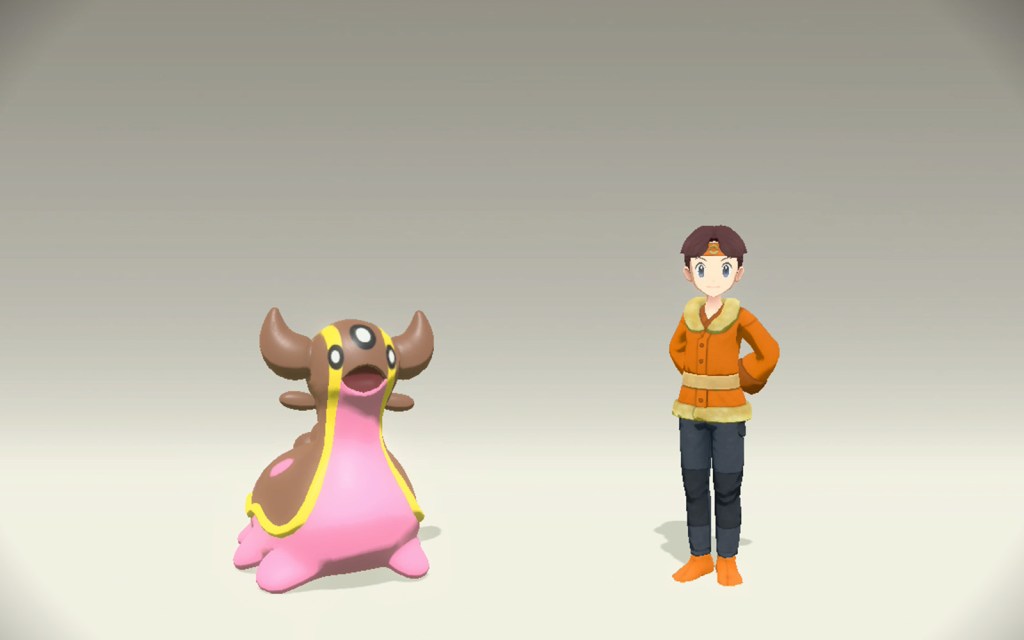
“I don’t want to switch out my Gholdengo, since I would lose the Special Attack boost I got from Nasty Plot. I should use Make it Rain to get some damage on my opponents Pokémon now.”

Framing: The Mimikyu Effect
Framing describes the context in which information is presented. For example, people are far more optimistic about undergoing surgery with a survival rate of 90% than they are about surgery with a 10% mortality rate. So, the next time ask yourself not only if you are comfortable with Draco Meteor connecting 90% of the time, but also if it’s okay to miss 10% of the time. Information can be disguised, just like Mimikyu.

Overconfidence
Kahneman proposes that people are often overconfident in their own abilities. They tend to overestimate how much they understand about a given situation and underestimate external factors. He explains this by introducing the concept of “What you see is all there is”, which states that people tend to put too much trust into information they know, while disregarding information they don’t know, even if they are aware that there is unknown information. These “Known Unknowns” are rarely considered and the possibility of “Unknown Unknowns” is often even disregarded entirely.
Many VGC players are actually quite good at considering “Known Unknowns”. A good player is unlikely to use Fake Out on the first turn of a battle if their opponent has Farigiraf on their team. They are aware that they don’t know which Pokémon their opponent has in the back. This becomes particularly important in closed-teamsheet formats, where the amount of “Known Unknown” information is too large to ever fully consider.

Conclusion
Let’s summarize how the ideas of behavioural economics can be useful for VGC players:
Consult both Lati-twins
Do not rely on your instincts to choose the best possible move for you, but don’t fully disregard it either. If Latios is telling you to immediately lock in a move, pause and think about what could go wrong. Consider the unknown pieces of information, both the ones you are and are not aware of, and let Latias approve the move you are about to choose.
Be willing to sacrifice boosts
The sunk cost fallacy can lead to making a suboptimal move, because the player was unwilling to let an advantage they have worked hard to get go to waste. Players tend to weigh the loss from switching out a boosted Pokémon more heavily than the advantage they gain from preserving it for a later point in the match. Therefore, try to consider the true cost and gain from a switch without being biased towards staying in, because you would let a turn used setting up go to waste.
Don’t be anchored to the first piece of information
Consider the possibility, that what seems like a guaranteed OHKO might have been a damage roll, or that your Pokémon moving first could have been a speedtie. Especially when the first piece of information is in a player’s favour, they tend to rely on it too heavily. Instead, be aware that the situation may be more uncertain than you think.
Information may be disguised by framing
When going for a risky play, consider it in terms of gains as well as losses. You may think that using Draco Meteor is fine, after all there’s a 90% chance for it to connect, are you really okay with the 10% risk of missing?
Do you know your Unowns?
Be aware of all the information that you don’t know and be open to the possibility of unknown information that you are not even considering. Be aware that you don’t know your opponent’s EV spreads or what Pokémon they have in the back, but also keep in mind that they may be exploiting some niche interaction that you are unaware of.
 Alpensee eSports e.V.